“Cuba 1979” is a film that takes us back in time to the tumultuous era of communist Cuba under the leadership of Fidel Castro. It’s a visual journey that paints a vivid picture of life in a society where individuality is sacrificed at the altar of ideology. The film is an unflinching look at a country wrestling with its identity, as it tries to define itself in the face of social, political, and economic challenges. Through stunning visuals and poignant storytelling, “Cuba 1979” captures the essence of a nation struggling to find its place in history.
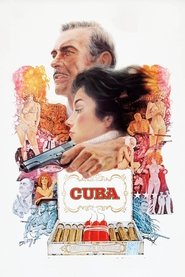
CLICK HERE⭭⭭⭭🎞️_Watch Cuba 1979 English Subtitles_
Review
As Mark Twain once said, “travel is fatal to prejudice, bigotry, and narrow-mindedness,” and his words hold especially true for the film “Cuba.” Directed by Richard Lester and released in 1979, “Cuba” takes viewers on a journey through the tumultuous political climate of the country during the late 1950s.
The film’s storyline follows an American soldier named Robert Dapes (played by Sean Connery) who has been sent to Havana to help train Batista’s army. However, he soon becomes disillusioned with the corrupt regime and falls in love with a revolutionary named Alexandra (played by Brooke Adams). Together, they become involved in the underground resistance and ultimately take part in the historic overthrow of Batista.
Despite being a fictional story, “Cuba” is based on real-life events that took place during Fidel Castro’s revolution. In fact, many of the characters and events portrayed in the film are based on actual people and situations. One such character is Alberto Delgado (played by Martin Balsam), who was a close friend of Che Guevara and played a major role in organizing the revolution.
The plot of “Cuba” is not without its flaws, but it still manages to capture the essence of Cuban politics during this time period. The film portrays both sides of the conflict – not just the revolutionaries – and attempts to show that both sides were motivated by what they believed was best for their country. This balanced approach makes for a thought-provoking viewing experience that is still relevant today.
One particularly memorable scene in “Cuba” takes place at a lavish party hosted by Batista himself. The camera pans over richly dressed guests sipping champagne as Connery’s character looks on disapprovingly. Suddenly, gunshots ring out as rebels launch an attack on the partygoers. This scene perfectly encapsulates the stark contrast between the opulence of Batista’s regime and the poverty and oppression faced by many Cubans.
The film’s cast is also noteworthy, featuring talented actors such as Connery, Adams, Balsam, and Denholm Elliott. Despite their individual successes in other projects, each actor gives a compelling performance that adds depth to their respective characters. In fact, Connery’s portrayal of Dapes has been praised for its subtle complexity.
The score of “Cuba” is another highlight of the film. Composed by Patrick Williams, it features a memorable main theme that perfectly captures the mood and setting of the story. The use of traditional Cuban music also adds authenticity to the film.
Despite its strengths, “Cuba” was met with mixed reviews upon its release. Some critics praised it for its ambitious storytelling and political commentary, while others criticized it as being too heavy-handed or lacking in subtlety. In retrospect, however, the film has gained a cult following and is seen as an interesting snapshot of a pivotal moment in Cuban history.
In terms of cinematography, “Cuba” was shot on location in both Spain and Mexico. The lush landscapes and colorful buildings make for visually stunning set pieces. The production design also deserves praise for recreating Havana in all its bustling glory.
One piece of trivia about “Cuba” is that director Richard Lester had previously worked with the Beatles on several films (including “A Hard Day’s Night” and “Help!”). In fact, John Lennon once jokingly suggested to Lester that he make a movie called “How I Won The War And The Revolution,” which may have been an inspiration for “Cuba.”
Despite not receiving any major awards or accolades at the time of its release, “Cuba” remains an interesting footnote in Sean Connery’s career. It was one of his first films after leaving the role of James Bond behind (for which he won an Academy Award for “The Untouchables” a few years later).
Overall, “Cuba” offers a unique perspective on a tumultuous period in Cuban history. Its blend of political commentary and romantic drama is sure to capture the attention of viewers who are interested in learning more about this fascinating country. As Mark Twain once said, “good travel books are fatal.” In the case of “Cuba,” it may be just as deadly to your preconceived notions as it is to your boredom.
Technical Data
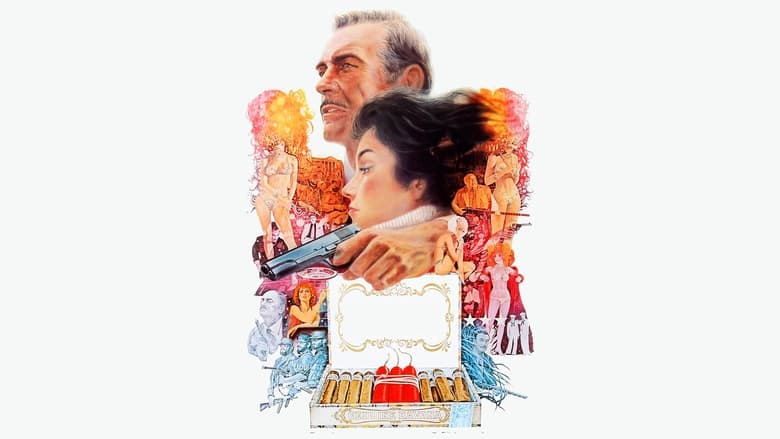
- Runtime : 122
- Release : 1979-12-21
- Genre : Action, Drama, Romance, Thriller, Adventure, War
- Cast : Sean Connery as Maj. Robert Dapes, Brooke Adams as Alexandra Lopez de Pulido, Jack Weston as Larry Gutman, Hector Elizondo as Capt. Raphael Ramirez, Denholm Elliott as Donald Skinner
- Crew : David Watkin as Director of Photography, Richard Lester as Director, Denis O’Dell as Executive Producer, Gil Parrondo as Production Design, Philip Harrison as Production Design
- Popularity 5.283
- Budget : 0
- Revenue : 0
- Company : United Artists
- Summary : A British mercenary arrives in pre-Revolution Cuba to help train the corrupt General Batista’s army against Castro’s guerrillas while he also romances a former lover now married to an unscrupulous plantation owner.
- Tagline : Part Heaven… Part Hell… Pure Havana.
