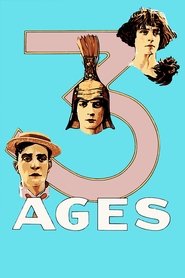
“Three Ages” is a 1923 silent film that explores love and romance through three different historical periods: prehistoric, ancient Rome, and modern-day New York City. The film features Buster Keaton as the protagonist who tries to win the heart of his love interest in each era. It’s like a time-traveling rom-com with slapstick humor and clever sight gags. The film showcases Keaton’s signature deadpan expressions and physical comedy skills, making it an entertaining and charming watch for any movie buff.
CLICK HERE🠣🠣🠣🎦_Watch Three Ages 1923 English Subtitles_
Review
I must confess that I recently watched a silent film that transported me to the beginnings of cinema. That’s right, Three Ages, by Buster Keaton, is one of those silent films that manages to make you forget about the passage of time and get you hooked from beginning to end.
Keaton’s film tells three different stories set in three different eras: the Stone Age, Ancient Rome and Modern Times. Three Ages follows a young couple through the ages as they experience the joys and challenges of love. The film takes us on a journey through time as it explores how relationships have evolved over the centuries.
The first segment takes place during prehistoric times; it is here that we see Keaton dressed in a fur loincloth trying to win his love interest’s affection while dealing with rival suitors and hostile wildlife. In this segment, Keaton uses some incredible special effects (for its time), including an impressive puppet show featuring wooly mammoths.
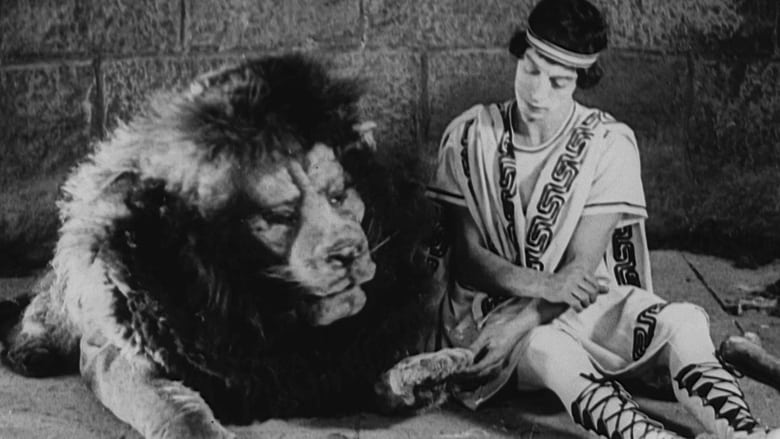
The second era takes us to gladiator fights in Ancient Rome where Keaton plays a poor protagonist in love with a woman who is being forced into marriage with another man. Here we can see how Keaton uses his physical skills to great effect in comedic situations such as when he becomes involved in hand-to-hand combat with several opponents.
Finally, we are transported to modern times where Keaton plays an everyday working man trying to woo his girl while dealing with other men vying for her attention. In this segment, we can see his adaptation to the modern world as he adopts fashionable attire and transportation means like bicycles.
Keaton’s physical comedy is perfectly choreographed throughout Three Ages; it is easy to forget that these scenes were created before computer-generated imagery was even thought of. His films are known for their use of practical stunts and demonstrations involving acrobatics; something quite amazing if you consider this was done during the silent era without any audio effects.
Another interesting aspect of Keaton’s film is the way he portrays society’s development. As a silent film, Three Ages does not have any dialogue, but it manages to make social commentary in an original style using visual storytelling. In that sense, it reminds me of Gabriel Garcia Marquez’s writing, which uses the magical realism to explain social changes.
Three Ages also features some incredible casts. Along with Keaton, we see other great actors like Margaret Leahy who plays the love interest through all three segments, Wallace Beery who appears in the second segment as a rival for Leahy’s affection and Josephine Joseph who appears in both the first and third segments. The ensemble cast worked perfectly together to create an entertaining and memorable film.
The score and popularity of Three Ages are surprising given that it was originally released back in 1923; almost 100 years ago. Keaton’s physical comedy was popular then and is still well-regarded by audiences today. This is no small feat considering how different entertainment tastes have changed over time.
The cinematography used throughout Three Ages is impressive for its time; the camera work always manages to capture each scene perfectly without any technical limitations while enhancing every situation with relative framing and lighting. It shows how much attention was given to such essential aspects as plot and developing characters even during this era where everything was experimental.
Three Ages received critical acclaim upon its release, winning praise for its creative use of special effects, physical comedy, and social commentary at a time when such issues were not usually raised in cinema. However, it did not receive any awards outside widespread public acclaim.
In terms of production details, Three Ages was filmed over three months between December 1922 and March 1923 with a budget of $62k—a significant amount for its time—while rehearsing took place seven weeks before filming began. The editing process was also quite exceptional since back then films were edited manually by physically cutting negatives, explaining why there are so few edits in Keaton’s films. Nonetheless, the final product was a huge success that paved the way for a new era of comedic cinema.
In conclusion, Three Ages by Buster Keaton is not only a fun-filled flick but also an important milestone in the evolution of film as an art form. It represents an unparalleled contribution to comedy and even social commentary that has influenced filmmakers for decades since it was first released. Its legacy is everlasting given how we still admire it even in today’s high-tech world with CGI and other special effects alternatives. It is worth noting how Keaton understood the importance of storytelling over flashy effects and dialogue; something filmmakers should reflect upon today as well.
Technical Data
- Runtime : 64
- Release : 1923-09-24
- Genre : Drama, Comedy
- Cast : Buster Keaton as The Boy, Margaret Leahy as The Girl, Wallace Beery as The Villain, Joe Roberts as The Girl’s Father, Blanche Payson as The Amazon
- Crew : Buster Keaton as Director, Buster Keaton as Producer, Clyde Bruckman as Story, Jean C. Havez as Story, Joseph A. Mitchell as Story
- Popularity 7.671
- Budget : 0
- Revenue : 0
- Company : Buster Keaton Productions
- Summary : The rituals of courtship, romantic rivalry and love play out three times as a man vies with a villain for the girl. In the Stone Age, the rivalry is set off by dinosaurs, a turtle used as a ouija board, and a round of golf with stones. In ancient Rome, the men display their brawn through a chariot race, using dogs instead of horses. In contemporary times, the man finds himself overcome by modernity, including a very fragile car.
- Tagline : A cyclone of laughs and thrills
